



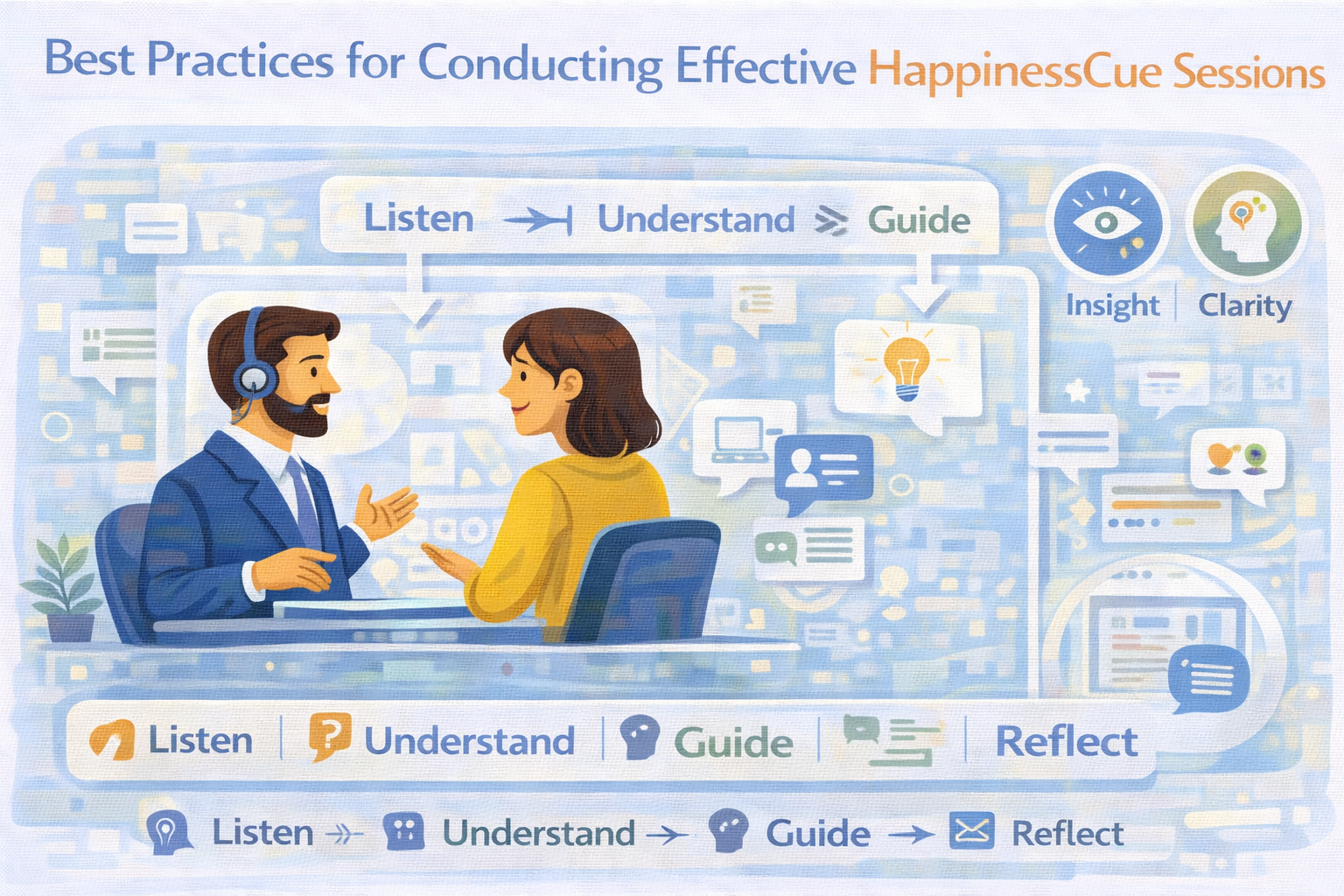
Best Practices for Conducting Effective HappinessCue Sessions
The Purpose of a HappinessCue Session
Clients come to HappinessCue seeking clarity, perspective, and thoughtful guidance.
A successful session is not simply about giving advice.
It is about helping the Client explore their situation, understand different perspectives, and leave the conversation with greater confidence about their next steps.
Experts who structure their sessions thoughtfully are able to create far more meaningful and valuable interactions.
Begin by Understanding the Client’s Situation
Every session should begin with careful listening.
Before offering guidance, take time to understand:
- What the Client is experiencing
- The context behind their concern
- What outcome or clarity they are hoping to achieve
Encouraging the Client to share their situation openly helps establish trust and ensures that the conversation addresses the right problem.
Clarify the Core Question
Often, the concern presented by a Client may not fully capture the underlying issue.
Experts can help by gently clarifying:
- What decision or challenge the Client is facing
- What options they may already be considering
- What uncertainty or confusion they want to resolve
This stage helps focus the session on the most meaningful topic.
Share Perspective, Not Prescriptions
Experts on HappinessCue are expected to provide insight and perspective based on experience, rather than prescribing definitive solutions.
Helpful approaches may include:
- Sharing relevant experiences
- Discussing possible approaches the Client could consider
- Highlighting potential risks or opportunities
The goal is to empower the Client to think clearly and make informed decisions.
Encourage Reflection and Clarity
A valuable session often helps the Client see their situation from a new perspective.
Experts may help Clients:
- reflect on their options
- evaluate different paths forward
- consider the implications of their decisions
Encouraging thoughtful reflection helps Clients leave the session with greater clarity.
Maintain a Respectful and Professional Tone
Experts are expected to maintain professionalism throughout the session.
This includes:
- Listening without judgment
- Respecting the Client’s experiences and viewpoints
- Communicating in a calm and constructive manner
A respectful environment allows Clients to engage openly in the conversation.
Respect the Scope of Guidance
HappinessCue sessions are intended for guidance and perspective.
Experts should avoid providing:
- medical or clinical diagnoses
- legal advice
- guaranteed outcomes or promises
Maintaining the correct scope ensures that sessions remain responsible and ethical.
Conclude the Session Thoughtfully
As the session approaches its conclusion, it can be helpful to summarize the key points discussed.
Experts may briefly recap:
- important insights from the conversation
- potential next steps the Client may consider
- reflections that may help the Client continue thinking about the issue
This helps the Client leave the session with a clearer sense of direction.
Important Things to Remember
When conducting sessions on HappinessCue:
- Focus on listening before offering guidance
- Encourage clarity and thoughtful reflection
- Share experience-based perspectives rather than absolute advice
- Maintain professionalism and respect throughout the conversation
These practices help create meaningful and impactful sessions for Clients.
Common Questions
Do Experts need to follow a strict structure during sessions?
No. Conversations may vary depending on the Client’s needs, but following thoughtful practices can help improve session quality.
Should Experts provide direct solutions to Clients?
Experts may share insights and perspectives, but Clients ultimately make their own decisions.
How long should a session focus on listening versus guidance?
Each session may differ, but understanding the Client’s situation thoroughly before offering guidance is recommended.
Can Experts share personal experiences during sessions?
Yes, when relevant and helpful, sharing experiences may provide useful perspective for the Client.